

Chongqing ·
Chongqing Xiaomian
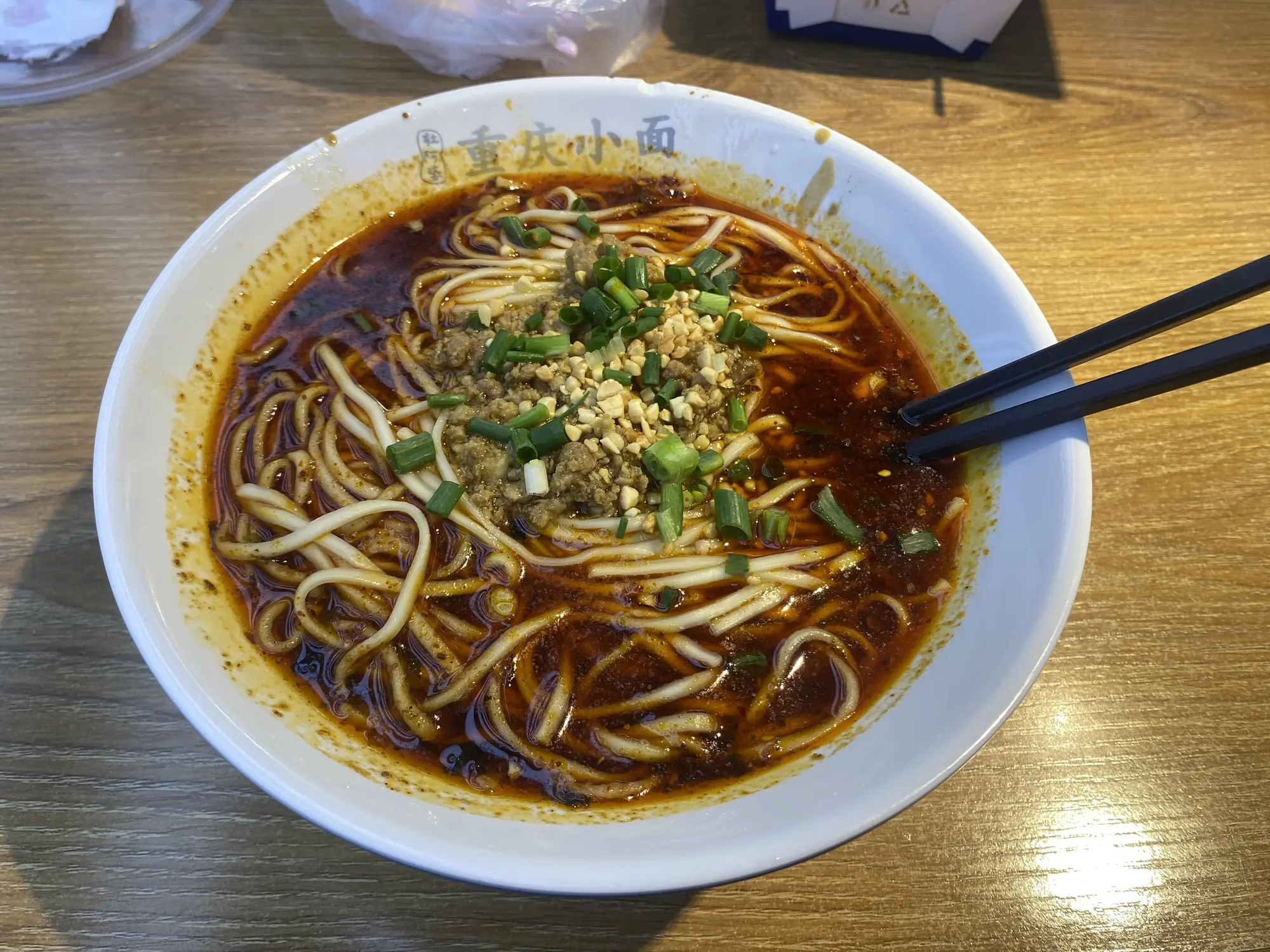
All the work is in the seasoning bowl and the noodles play second; a Chongqing morning starts with mixing that bowl.
INGREDIENTS
Noodles & greens
- Fresh wheat noodles, 300g
- A handful of baby bok choy or vine spinach
Seasoning (for one bowl)
- Chilli oil, 2 tbsp
- Garlic water, 1 tbsp
- Ginger water, 1/2 tbsp
- Soy sauce, 1 tbsp
- Sesame paste, 1/2 tbsp
- Ground Sichuan pepper, a pinch
- MSG, a pinch
- Lard, a small knob
- Chopped spring onion, to taste
- Toasted crushed peanuts, 1 tbsp
READ THESE FIRST
- Seasonings go in the bowl before the soup — reverse the order and the flavour never comes together.
- Don't overcook the noodles; a slight firmness at the core is right, and they finish in the bowl.
- Drain them properly — water carried into the bowl flattens the whole thing.
- Without lard, rapeseed oil works, but the fragrance thins — this is the hardest ingredient to substitute.
- Render the chilli oil fresh if you can: pour the hot oil over the ground chilli in three stages — low heat for fragrance, medium for heat, high for colour.
Mix the bowl first
Lay every seasoning into the empty bowl in order — this is the step that decides the dish, and Chongqing cooks call it da liao. The order matters: soy sauce first, because it is the salt base; then sesame paste and lard, which need hot liquid to loosen; then chilli oil and ground pepper, whose fragrance rides on fat; garlic and ginger water last. Two liang of noodles takes a tablespoon and a half of soy; with meat on top, cut it to one. Before a single noodle hits the water, seven-tenths of the flavour is already settled.
5 minLoosen it with noodle water
Ladle two spoons of the boiling noodle water into the bowl and work the sesame paste and lard loose with chopsticks until nothing is left clumped at the bottom. The water must be boiling — sesame paste meeting cold water seizes into a lump that no amount of stirring will break, and you find it waiting at the bottom of the bowl at the end. Use the noodle water rather than clean water: the starch it carries is what makes the seasoning cling to the noodles. Let it stand ten seconds or so and the fragrance comes up.
1 min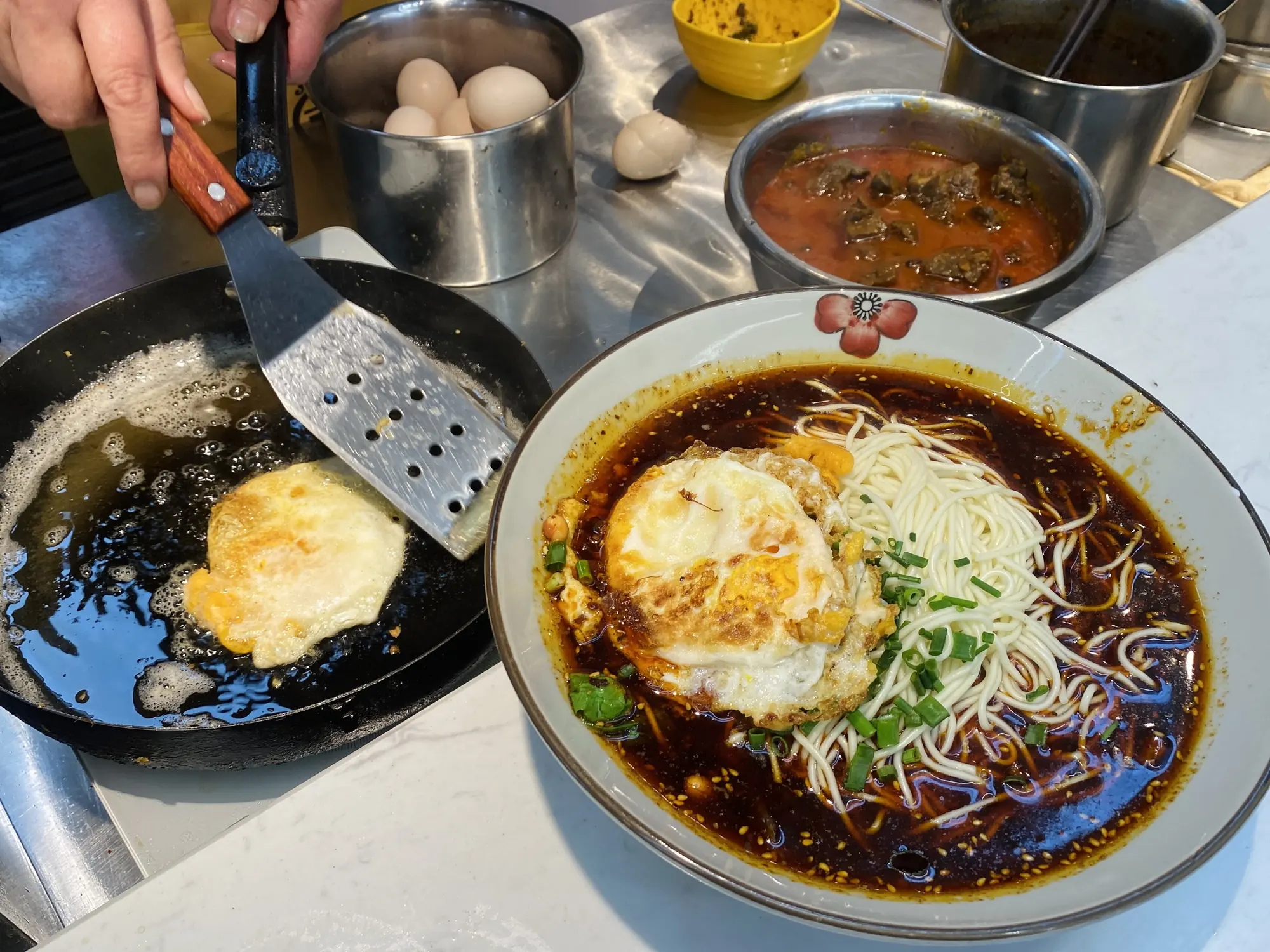
Boil the noodles, blanch the greens
Drop the noodles in and lift them the moment the water returns to a rolling boil — xiaomian is eaten with a firm bite, and a thread of white still at the core is right, because they keep cooking in the residual heat and seasoning once they are in the bowl. Overcooked, they fall apart and hold nothing. Throw the greens in for the last ten seconds, just to the point of tenderness, still green. Leave the lid off throughout and skim the foam.
2 minLift them out dry
Raise the noodles on chopsticks, shake twice over the pot to drain, then put them in the bowl. This is the beginner's classic mistake: a spoonful of water carried in dilutes the seasoning and flattens the whole bowl at once, and there is no fixing it — more soy sauce only makes it salty, not fragrant. The careful move is to bed the blanched greens on one side of the bowl and lay the noodles on the other, so there is room to turn them when you toss.
30 sec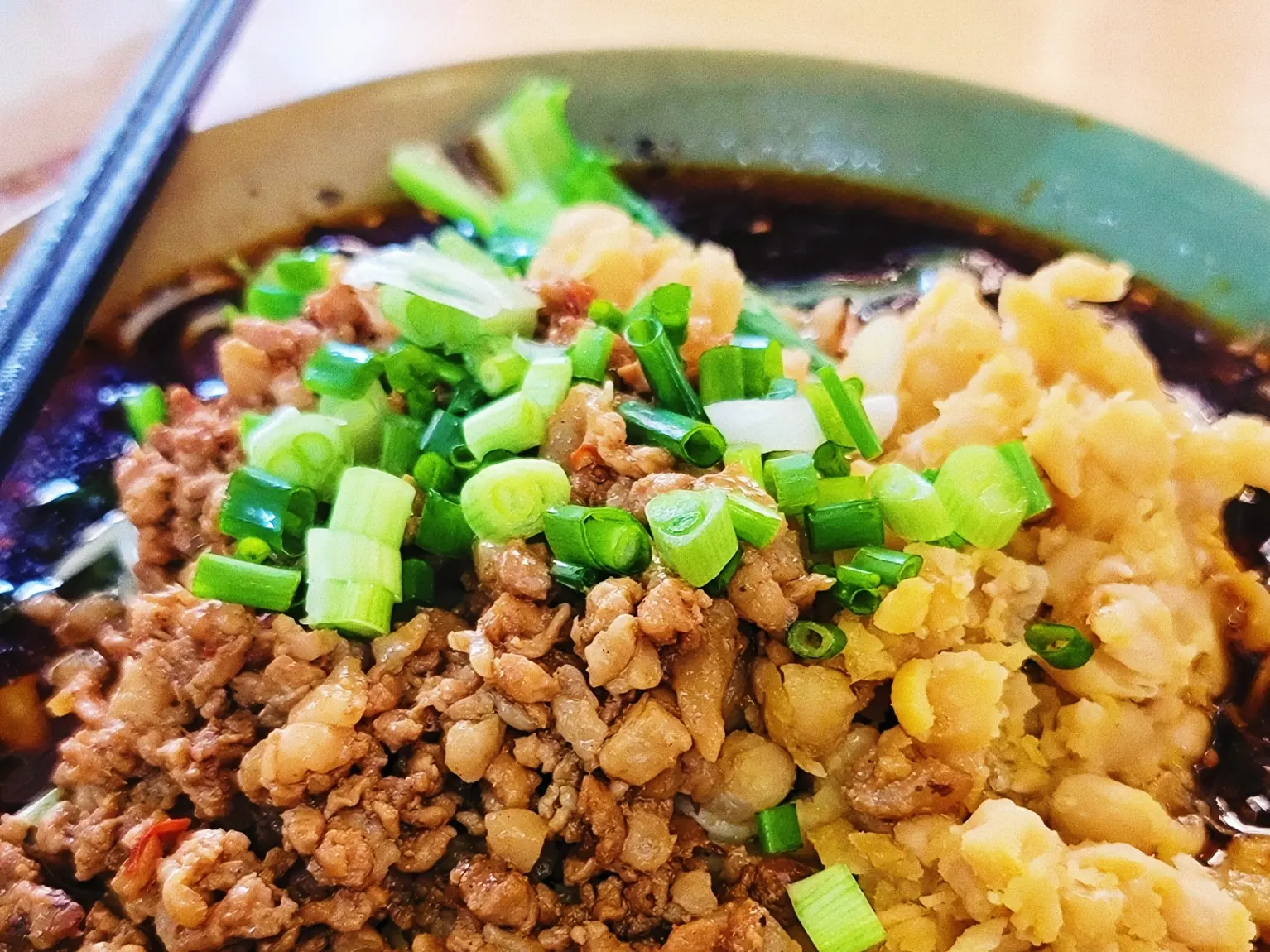
Top and toss
Lay the greens over the noodles and scatter spring onion and toasted crushed peanuts; a spoon of pickled mustard stem if you like. Don't photograph it first — the chilli oil floats and everything good has sunk, so turn the seasoning up from the bottom, toss it through and eat it hot. Chongqing eats xiaomian fast: ten minutes from table to empty bowl, because noodles left sitting swell.
30 sec