
BACKGROUND
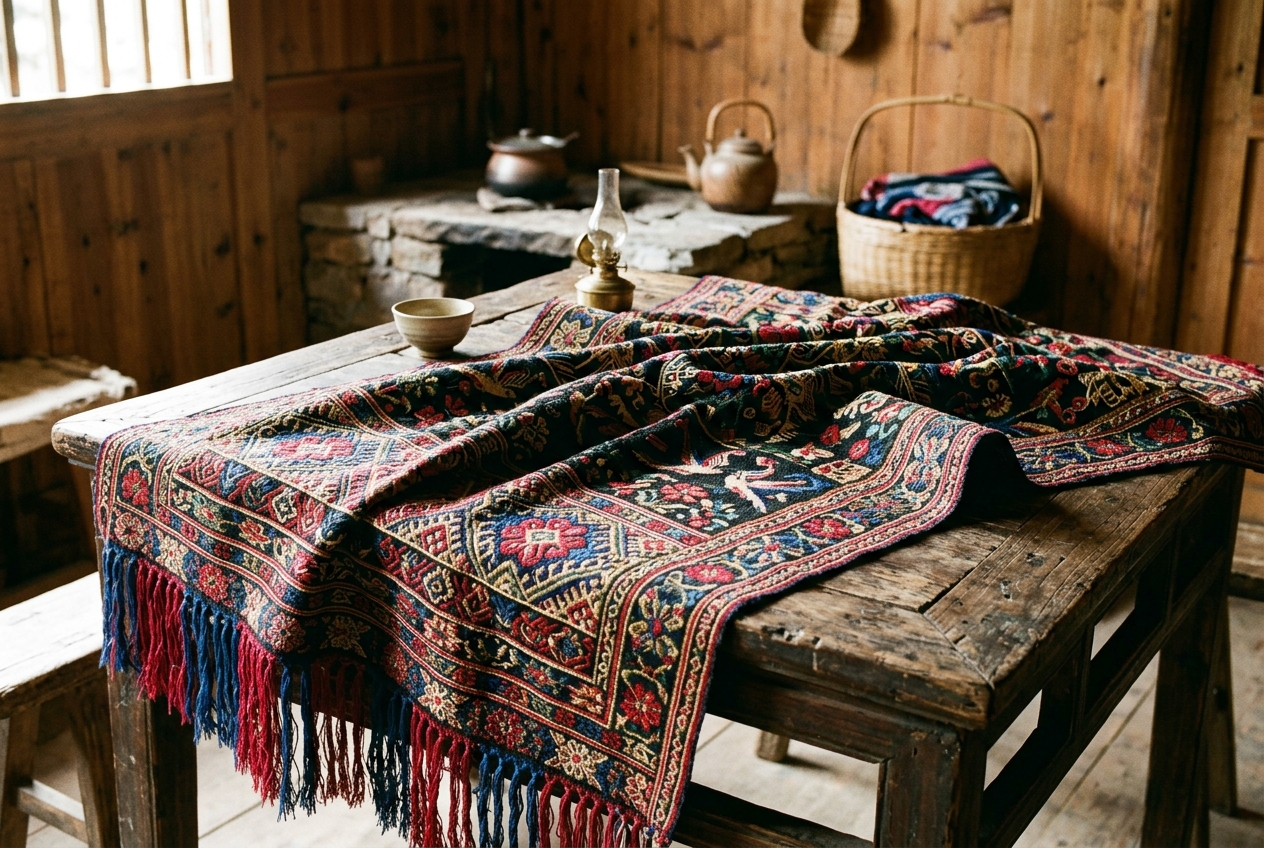
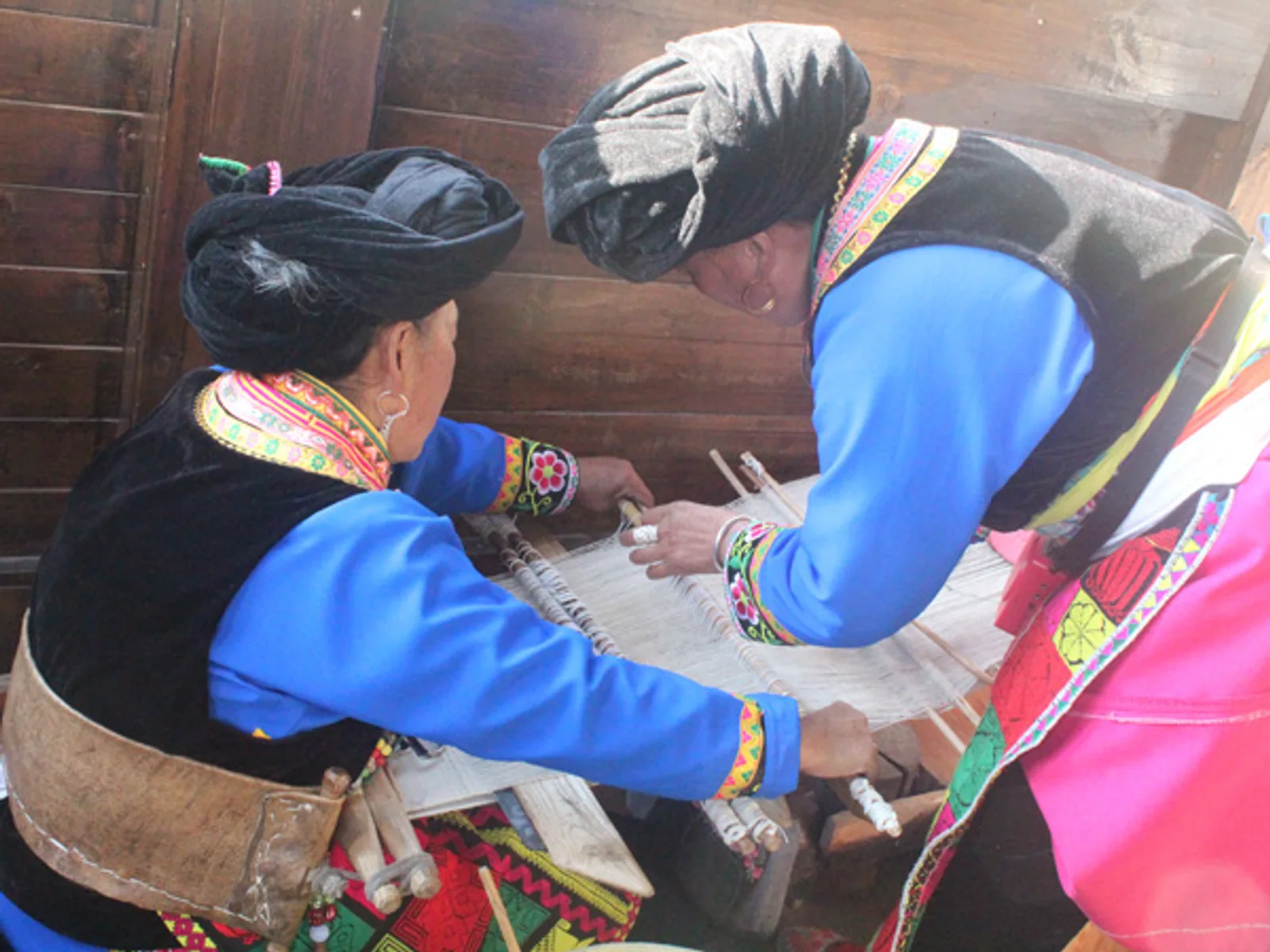
Tujia brocade weaving was inscribed on China's first national list of intangible cultural heritage in 2006. Historically, Xilankapu stood as the most significant element of a daughter's bridal dowry — weaving practice commenced in early childhood under maternal guidance and the finished masterworks were solemnly presented on her wedding day. The craft has been transmitted exclusively along matrilineal lineages across generations without paper patterns, relying entirely on rhyming mnemonics and mental arithmetic. In the Ming and Qing dynasties it was prized as imperial tribute cloth, serving both as sacred festival vestments and durable household blankets. Today, while appearing in contemporary design and museum collections, its core reverse-weaving manual framework remains unchanged, with every square inch requiring thousands of deliberate picks with ox-bone knives.
WHERE TO SEE IT
- Workshops and heritage centres across Enshi, Xuan'en, and Laifeng maintain active timber looms, offering intimate views of master weavers practicing reverse-side continuous-warp and discontinuous-weft techniques.
- The heritage galleries at Enshi Tusi City and Tujia Daughter City preserve antique brocades from the Qing dynasty with detailed interpretations of totem and geometric motifs — recommended before watching live weaving.
- Hands-on loom sessions or ordering bespoke large tapestries require advance booking with master practitioners, as completing a standard heirloom piece requires months of meticulous craftsmanship.
Yarn Preparation and Botanical Dyeing
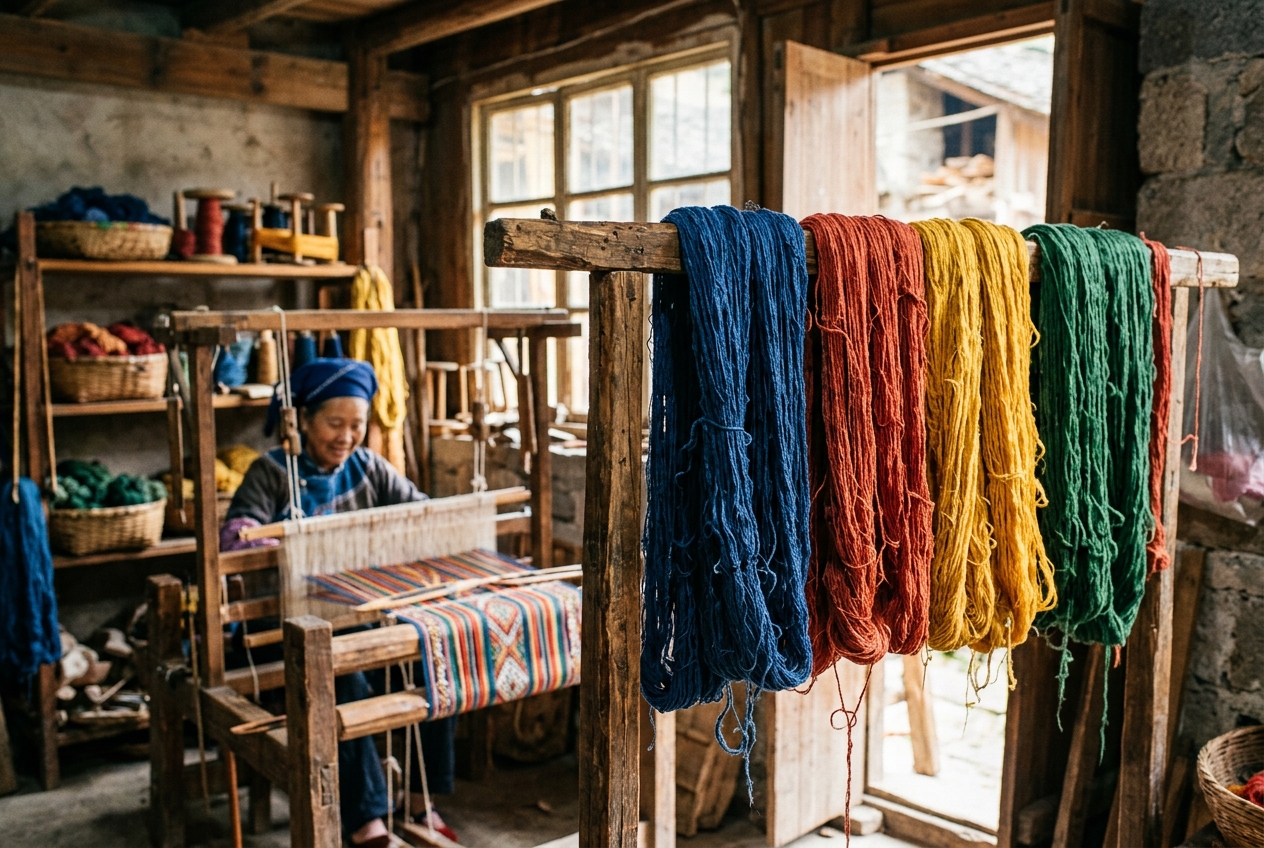
Fine cotton or silk threads are selected and immersed in natural botanical and mineral dyes such as gardenia, indigo, and madder root. The traditional palette anchors cinnabar red, mineral blue, and vibrant yellow against a deep obsidian ground, ensuring intense optical contrast inside dim timber architecture.
Loom Warping and Tension Calibration
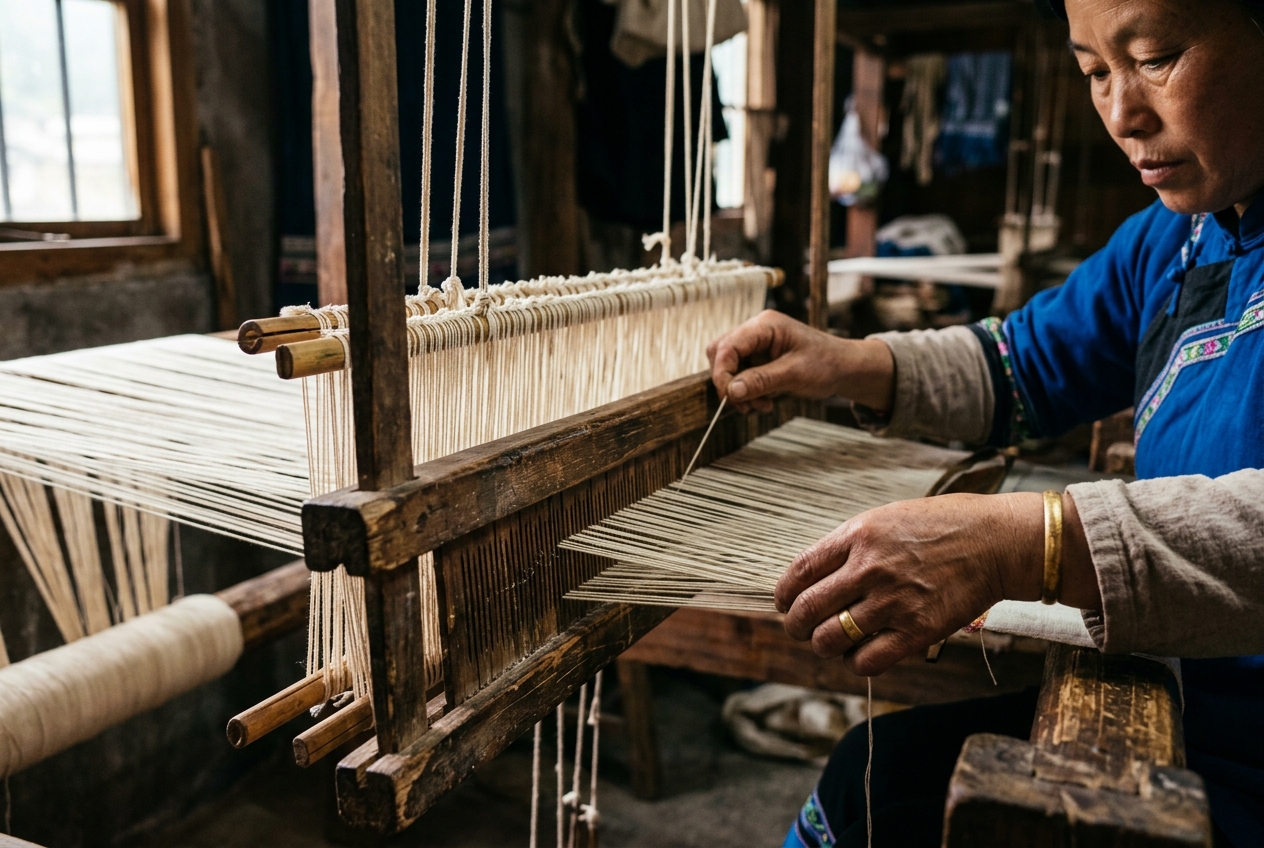
Hundreds of warp yarns are stretched onto ancient inclined wooden looms. The precise tensioning and warp density determine the structural resilience and smoothness of the entire cloth, establishing an irreversible baseline for the months of weaving ahead.
Discontinuous Weft and Pattern Picking
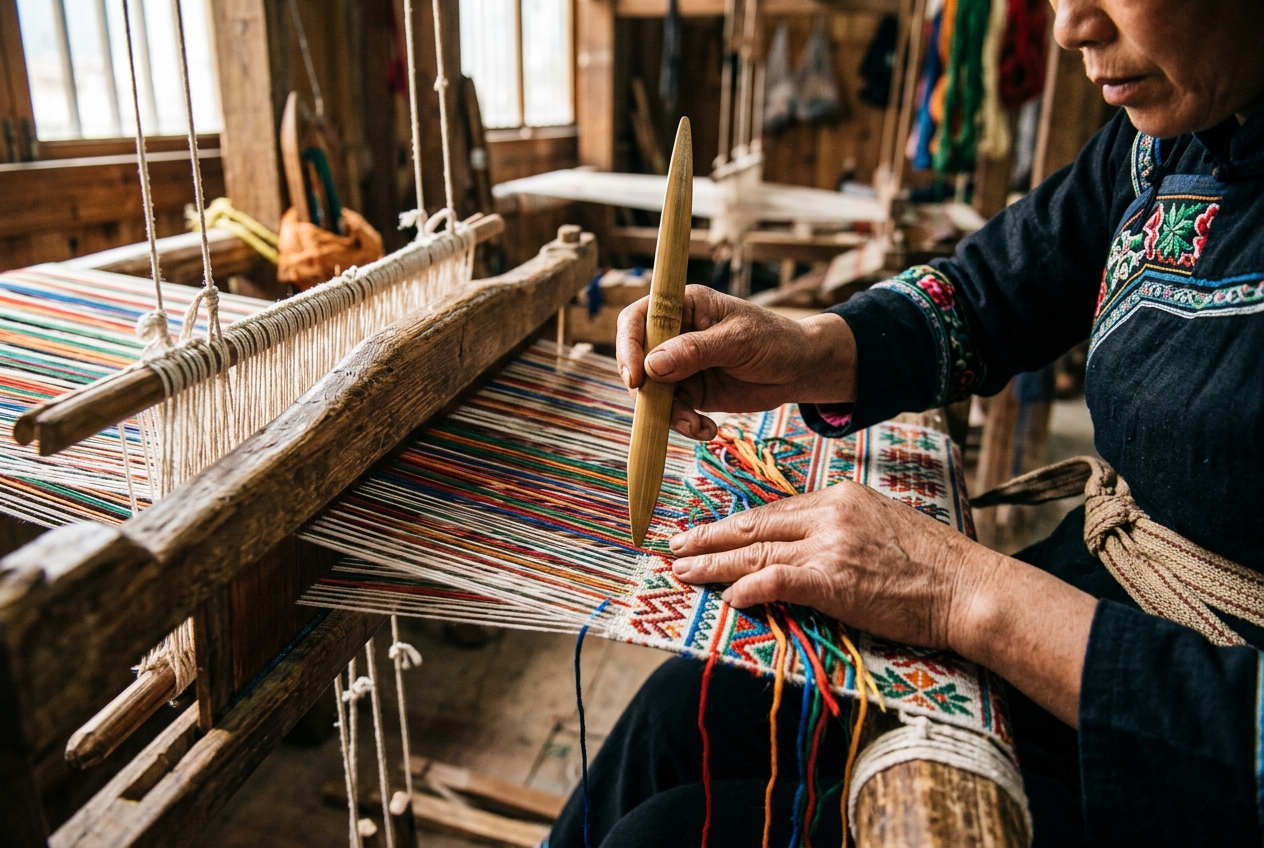
Dispensing with through-running shuttles, the weaver follows mental pattern songs to pick and press multicolored weft yarns section by section with polished ox-bone knives and bamboo needles. This labor-intensive method limits daily progress to roughly the size of an open palm.
Loom Cutting and Ritual Unveiling
Upon completion, the cloth is cut from the frame and turned right-side up, revealing for the first time its full panorama of geometric hooks and ancestral motifs. The finished heirloom enters daily life as ceremonial quilt covers, baby carriers, or cherished tapestries.